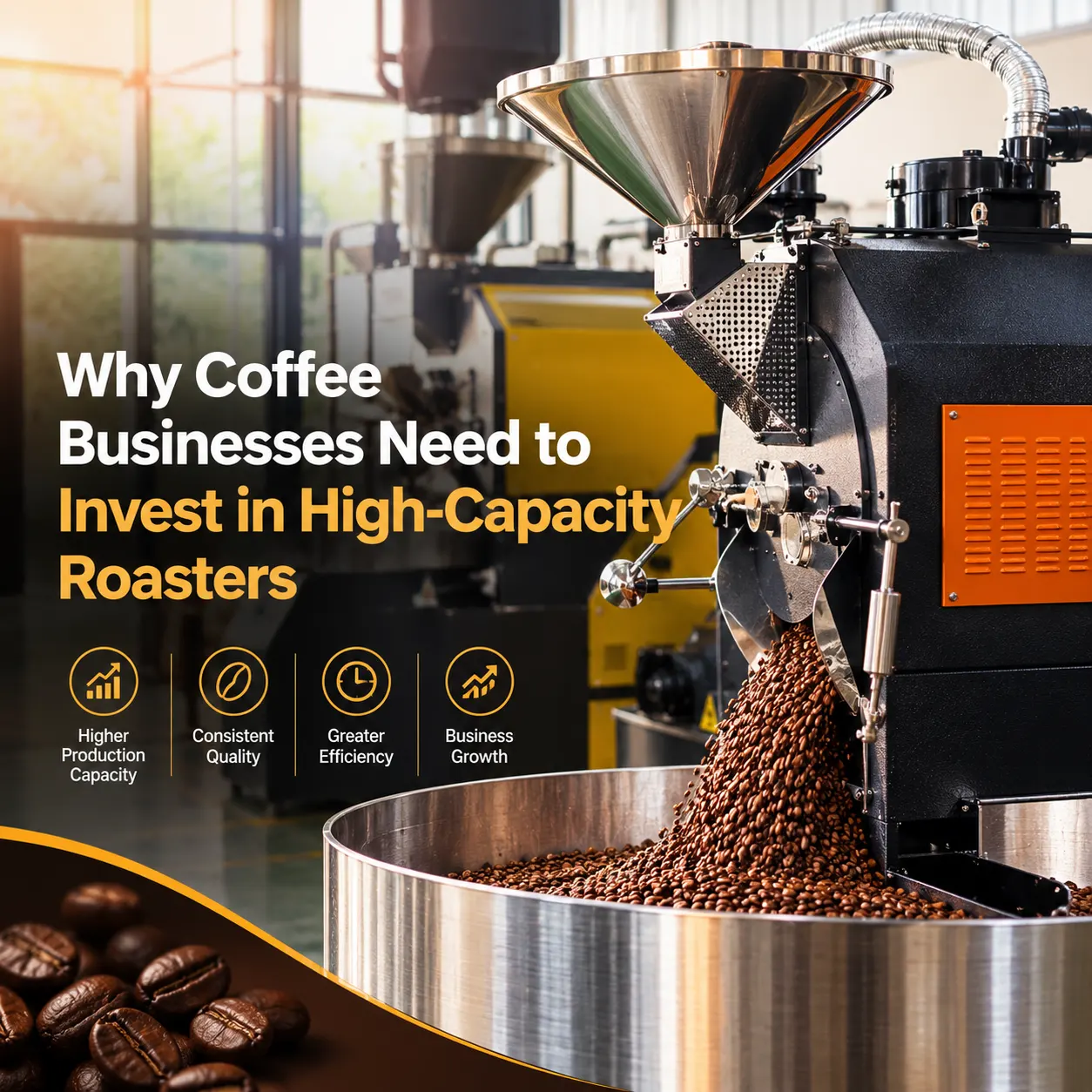
In the context of Vietnam’s increasingly developed and fiercely competitive coffee industry, owning an industrial high-capacity coffee roaster is no longer optional — it has become a matter of survival for production facilities, coffee chains, and exporting businesses. This equipment not only boosts output but also directly determines flavor quality — the core factor that builds a brand.
The article below analyzes in detail the reasons why businesses should invest in high-capacity coffee roasters, helping you make the right investment decision.
Why Coffee Businesses Need to Invest in High-Capacity Roasters
1. Increase Production Output, Meet Large Orders
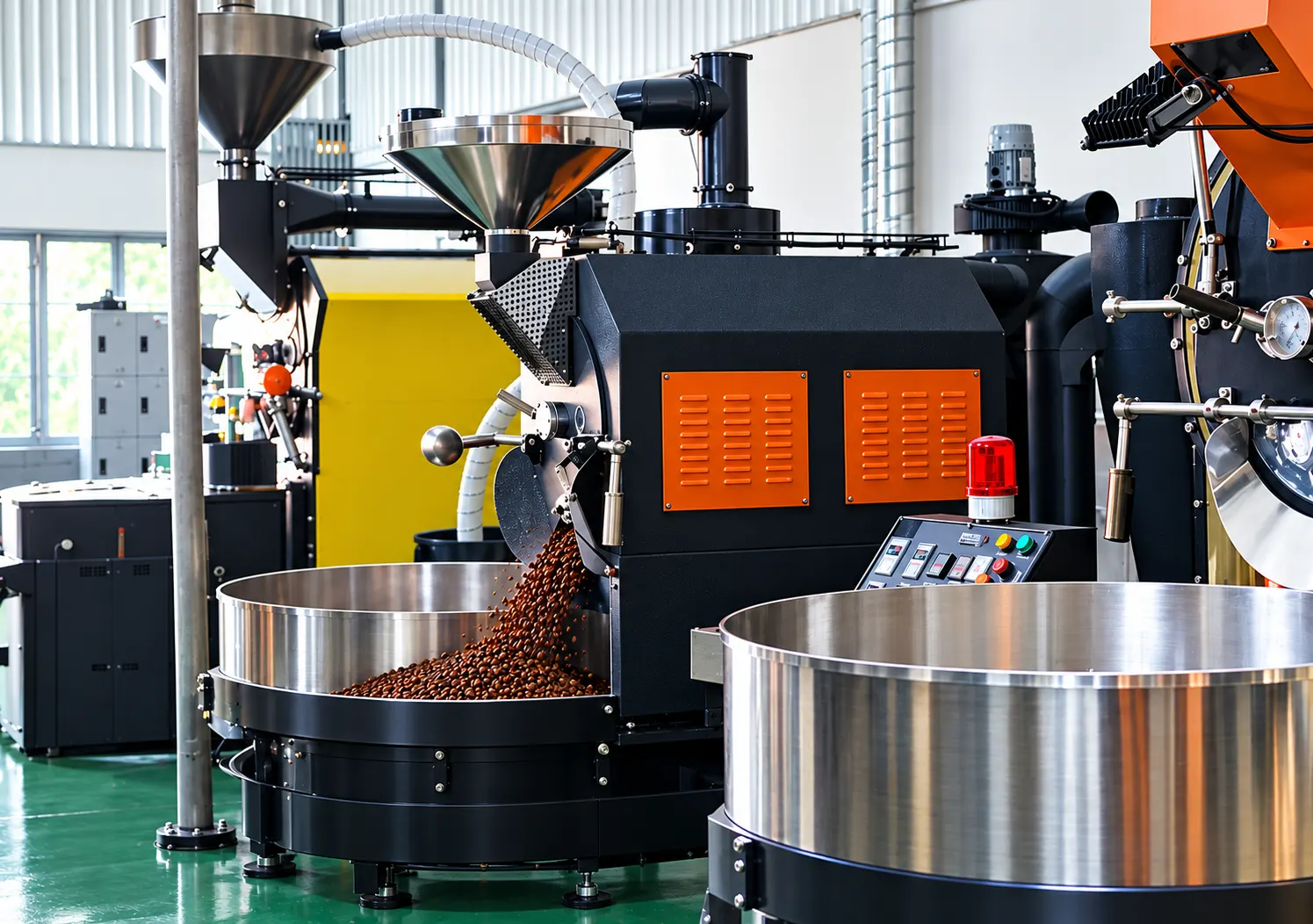
One of the clearest benefits of an industrial coffee roaster is its ability to process large volumes in a short time. With capacities ranging from 30kg to several hundred kg per batch, businesses can:
- Complete large orders quickly and on schedule
- Reduce the number of operating cycles, saving time and labor
- Proactively secure supply when market demand spikes
This is a key factor that allows businesses to scale up without being limited by production capacity.
2. Ensure Consistent, Stable Roasting Quality Across Every Batch
Modern high-capacity coffee roasters are equipped with:
- Precise temperature control systems
- Real-time monitoring sensors
- Software that records and reproduces roast profiles
As a result, every batch of coffee — even at large volumes — maintains a consistent flavor, minimizing errors caused by human factors. This is something nearly impossible to achieve with manual roasting or small-capacity machines.
3. Optimize Operating Costs, Increase Profit Margins
In the long run, investing in an industrial coffee roaster helps businesses:
- Reduce fuel and electricity costs per kg of finished product
- Lower labor costs
- Increase production efficiency, thereby improving profit margins
Although the initial investment cost is higher than smaller roasters, economies of scale help businesses recover their investment faster and optimize profitability over time.
4. Meet Export Standards and Requirements of Major Partners
For businesses targeting export markets or supplying supermarket chains, restaurants, and hotels, owning an industrial high-capacity coffee roaster helps:
- Meet large order quantities on time
- Easily achieve food safety certifications (HACCP, ISO 22000, etc.)
- Build a professional, transparent, and easily controlled production process
This is a crucial factor in enhancing a business’s reputation and expanding into international markets.
5. Long-Term Vision: Avoid Repeated Equipment Upgrades
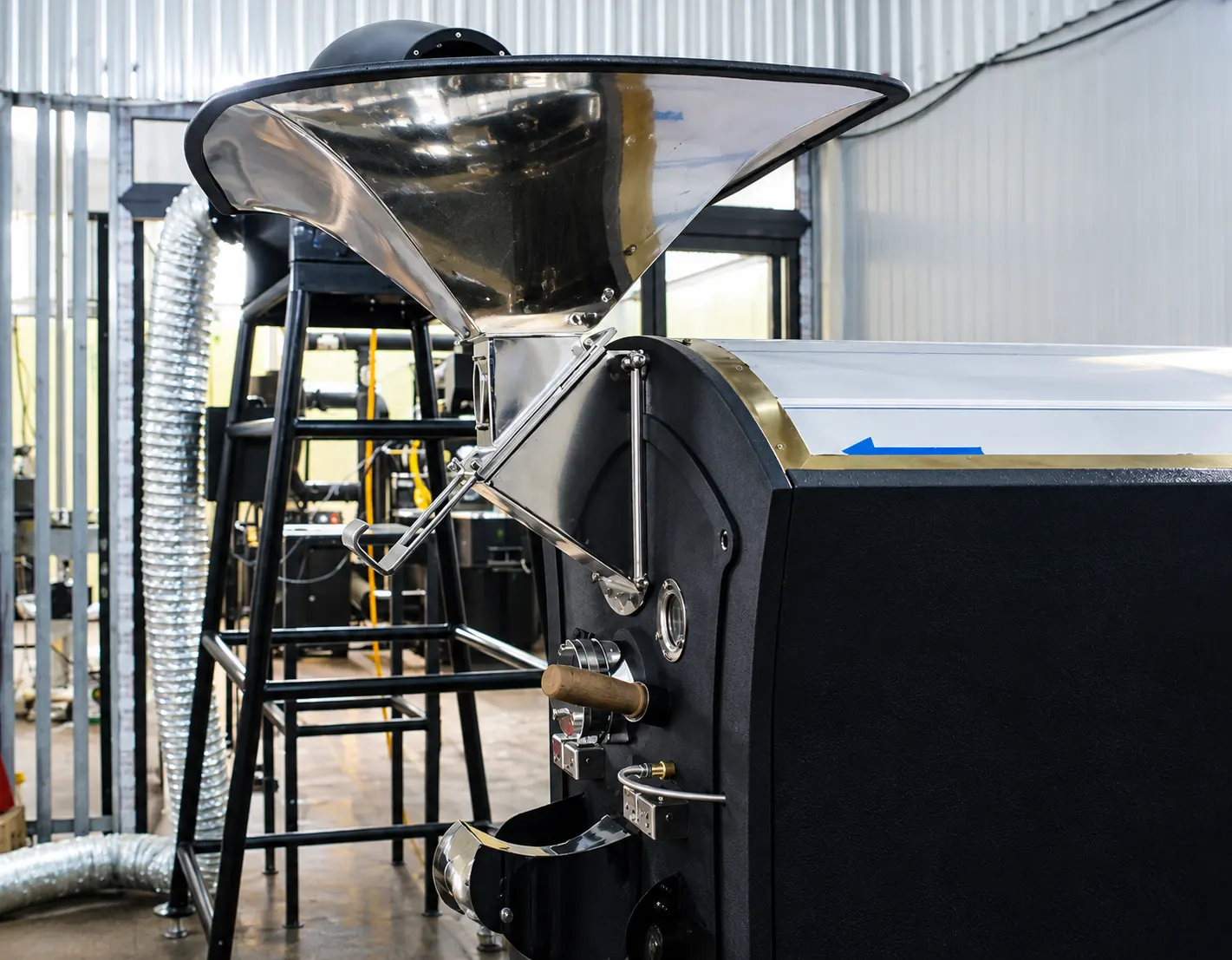
Many businesses make the mistake of choosing small-capacity machines to save on initial costs, only to be forced into re-investment when demand grows. Choosing a high-capacity coffee roaster from the start helps:
- Save on long-term investment costs
- Avoid production disruptions caused by equipment upgrades
- Build a solid foundation for a 3–5 year growth strategy
6. Reduce Dependence on Skilled Roasters, Simplify Staff Training
With highly automated systems, parameters such as temperature, time, and bean agitation speed are pre-set and stored. This helps businesses:
- Reduce reliance on individual roasters’ personal experience
- Easily train new staff
- Maintain consistent product quality even when operators change
Key Considerations When Choosing an Industrial High-Capacity Coffee Roaster
Before making a purchase decision, businesses should consider the following factors:
- Appropriate capacity based on actual output and expansion plans
- Heat source: gas, electric, or a combination of both
- Brand and origin of the machine (Germany, Italy, China, Vietnam, etc.)
- Warranty and maintenance policies, and availability of replacement parts
- Initial investment cost relative to budget and expected payback period
Conclusion
An industrial high-capacity coffee roaster is a strategic investment that helps businesses boost productivity, ensure stable product quality, and support sustainable production growth. In an increasingly competitive coffee market, having the right equipment not only optimizes operations but also lays the foundation for a business to establish a strong position both domestically and internationally.